Build with Park Graph
The parking infrastructure platform for every AI agent, navigation engine, and developer. One API, every platform.
All integration docs last updated June 2026.
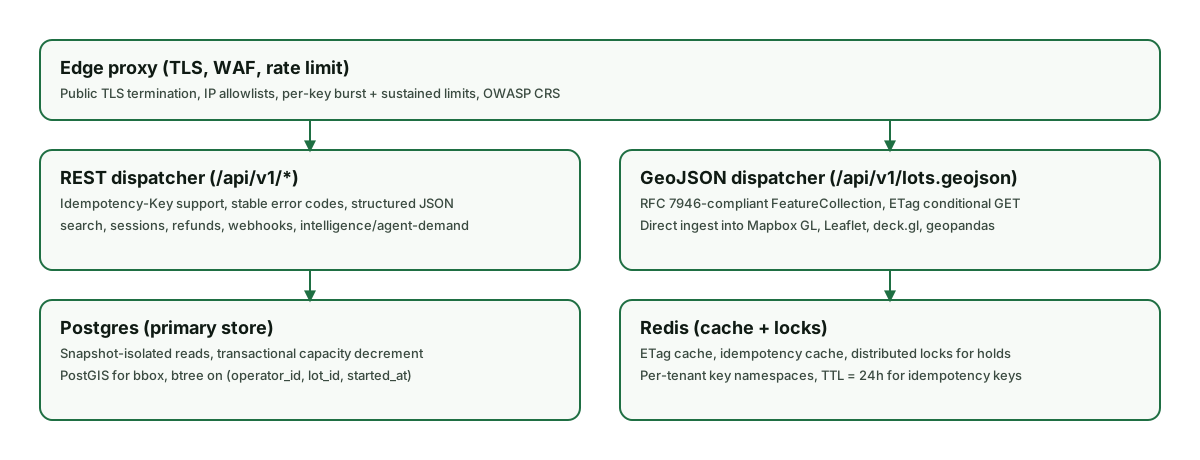
Park Graph is the connectivity layer between physical parking lots and the software that drivers — and increasingly, AI agents — use to find them. Every integration on this page is built on a single REST API described by one OpenAPI specification. That means whether a request comes from Claude, ChatGPT, a navigation engine, your own mobile app, or a curl command in a shell script, it hits the same well-defined endpoints to search for parking, create and extend sessions, capture payments, and read live availability.
You do not need a different SDK for each platform or a bespoke contract for each partner. Because the contract is the OpenAPI spec, AI platforms that support tool calling can ingest it directly and generate their own function definitions, while human developers can use our typed SDKs, the CLI, or plain HTTP. The result is one surface to learn, one set of credentials to manage, and one place to watch for changes in the changelog.
Getting started takes a few minutes. Create an API key from your dashboard, point any client at the base URL, and authenticate with a bearer token on every request. The same key works across the REST API, the SDKs, the CLI, and every agent adapter, so there is nothing extra to provision when you add a new platform. Rate limits, error codes, and pagination behave consistently across every endpoint, which means the patterns you learn on one integration carry over to the rest. Start in the sandbox with sample lots and sessions, confirm the responses match your expectations, then flip the same code to production by swapping the key — no rewrites required.
Quick Start
Get your API key and make your first request in 2 minutes
API Reference
Complete REST API documentation with interactive explorer
Intelligence API
Market rates, demand forecasts, and AI agent analytics
AI Platform Integrations
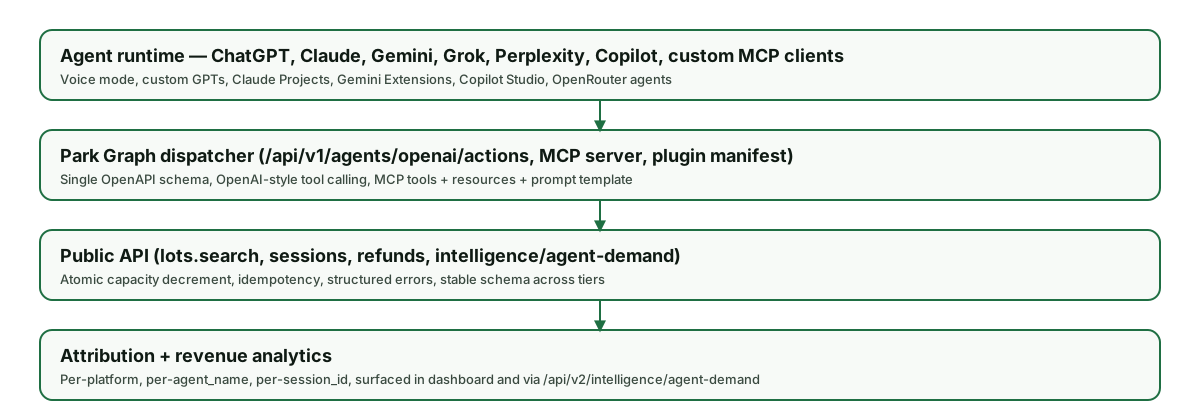
Every major AI agent can search, book, and manage parking through Park Graph.
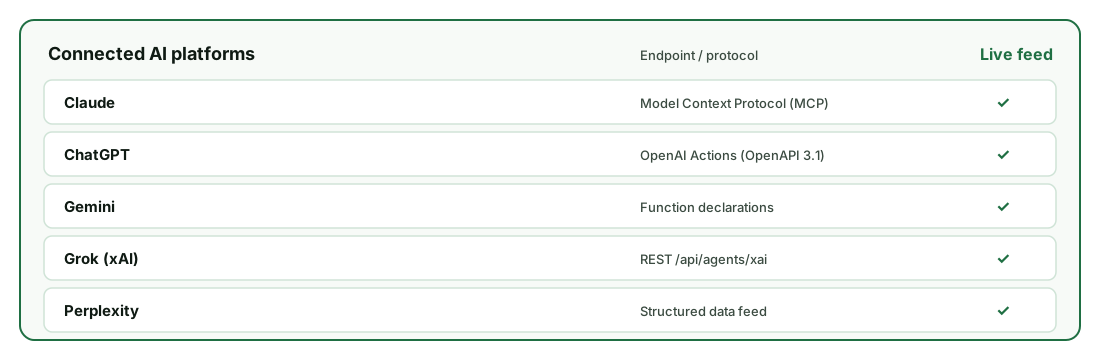
Agent integrations share the same authentication and the same endpoints; the only difference is the adapter each platform expects. The Model Context Protocol server exposes Park Graph as tools to Claude and other MCP clients. ChatGPT, Gemini, Grok, Perplexity, and Microsoft Copilot each consume the OpenAPI specification through their native function-calling or actions format. Anything else that speaks an OpenAI-compatible tool schema can connect through the other-platforms guide.
Claude
activeMCP Server
ChatGPT
activeOpenAI Actions
Gemini
activeFunction Declarations
Grok
activexAI Function Calling
Perplexity
activeAgent API
Copilot
activeM365 Plugin
CLI
activeREST / curl
SDK
activeTypeScript SDK
Others
activeOpenAI-Compatible
Navigation Engines
Make your lots discoverable on every map and navigation platform.
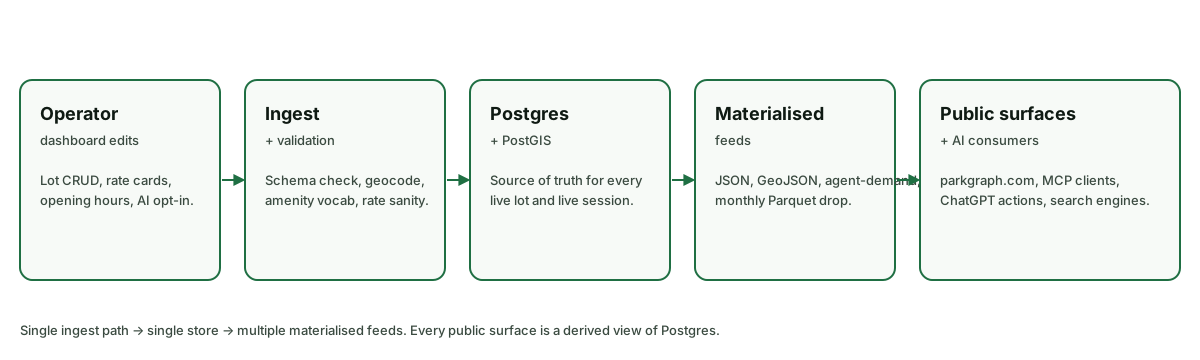
Drivers still find most parking while they are already navigating, so Park Graph syncs your lots, pricing, and live availability out to the major map and navigation engines. List on Google Maps and Apple Maps so drivers can tap straight to a lot, surface availability inside Waze, and render parking as native layers in Mapbox, Geoapify, and OpenStreetMap-based apps. The same data that powers AI agents keeps every map current.
Google Maps
Integration guide
Apple Maps
Integration guide
Waze
Integration guide
MapBox
Integration guide
Geoapify
Integration guide
OpenStreetMap
Integration guide
Reference
When you are ready to build, the reference docs cover the full surface: an interactive API reference, the autonomous-vehicle fleet endpoints, webhooks for real-time events, and a sandbox with sample data so you can test end to end before touching production. Pair them with the SDKs and CLI for everyday work, and watch the changelog for any breaking or additive changes.
API Reference
Interactive API explorer with live requests
AV Fleet API
Autonomous vehicle fleet parking integration
Webhooks
Real-time event notifications
Sandbox
Test environment with sample data