Guides
Modern parking, explained
In-depth guides covering the systems, payments, analytics, and AI behind a software-first parking operation.
Smart Parking System
What a modern smart parking system looks like in 2026.
Learn moreQR Code Parking Payment
How QR-based parking payments replace meters and gates.
Learn moreContactless Parking
Why contactless parking is the new default — and what to enable first.
Learn moreDigital Parking Meter
Replace single-space meters with a software-only alternative.
Learn moreParking Lot Software
What to look for when choosing parking lot management software.
Learn moreParking Analytics
The metrics that actually move parking revenue.
Learn moreRevenue Optimization
Dynamic pricing, surge events, and the math of yield.
Learn moreAI Parking Management
How AI handles bookings, support, and pricing — autonomously.
Learn moreParking API Integration
Connect parking data to your existing systems via REST and webhooks.
Learn moreAutomated Parking Solutions
What full automation looks like — and what's worth automating first.
Learn moreWhat this guide cluster covers
Parking technology has spent two decades adding hardware: single-space meters, multi-space pay stations, gate arms, ALPR cameras, and per-space sensors. Each device solved one problem and created two more — capital cost, maintenance, downtime, and a data silo that did not talk to the next device. The guides collected here describe a different approach. Instead of bolting payment, pricing, occupancy, and discovery onto separate machines, a software-first parking operation runs all of them from one platform, with a printed QR code as the only physical artifact on the ground.
That shift changes what an operator has to learn. The questions are no longer about which meter to buy or how to wire a sensor grid; they are about how QR payment flows work, how dynamic pricing rules are configured, what occupancy data you can derive without sensors, and how AI agents and mapping platforms discover your lot. These guides walk through each of those topics in depth, grounded in how Park Graph actually works rather than in vendor marketing.
If you are new to the category, start with the smart parking system overview and the QR code parking payment guide — together they cover the foundation that every other topic builds on.
Payments, pricing, and the economics of going software-first
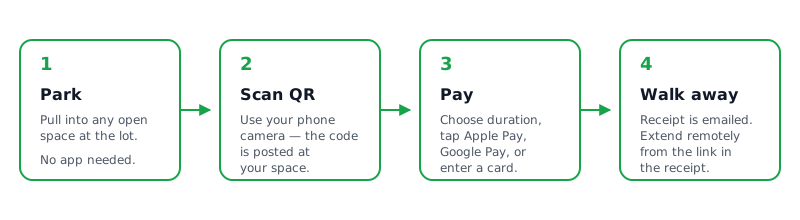
The payments guides explain how a driver moves from scanning a code to an active, paid session, and how that money reaches the operator. There is no driver app to download and no account to create — the payment happens in the mobile browser using Apple Pay, Google Pay, or a card, and Stripe handles authorization, capture, fee splitting, and payout. For operators that means no cash handling, no coin collection routes, and no end-of-month reconciliation against a fleet of meters.
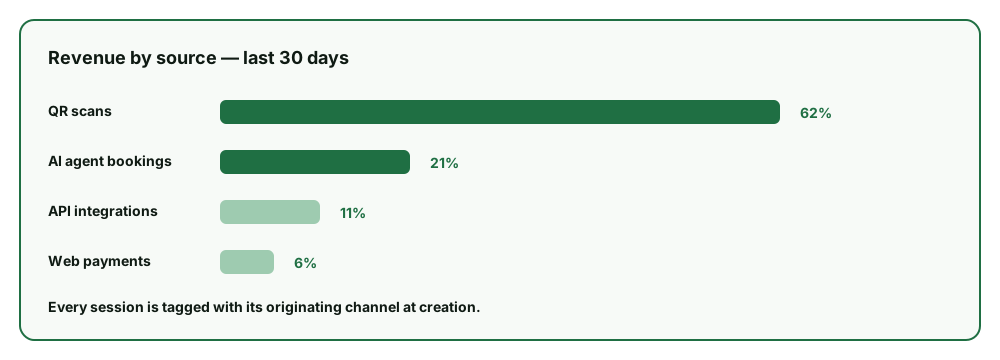
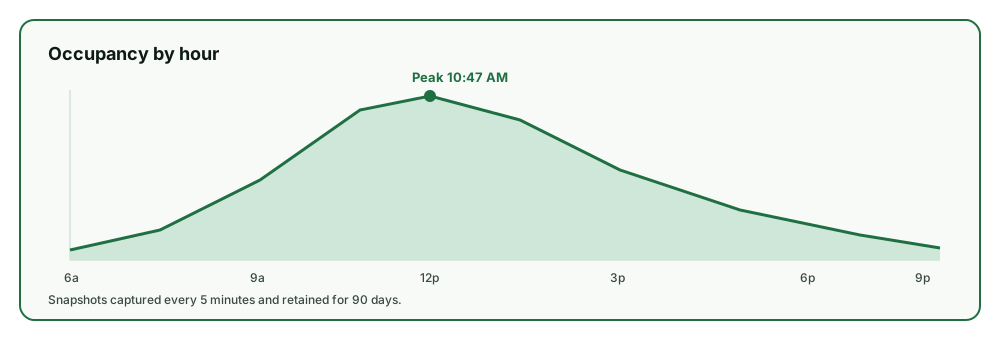
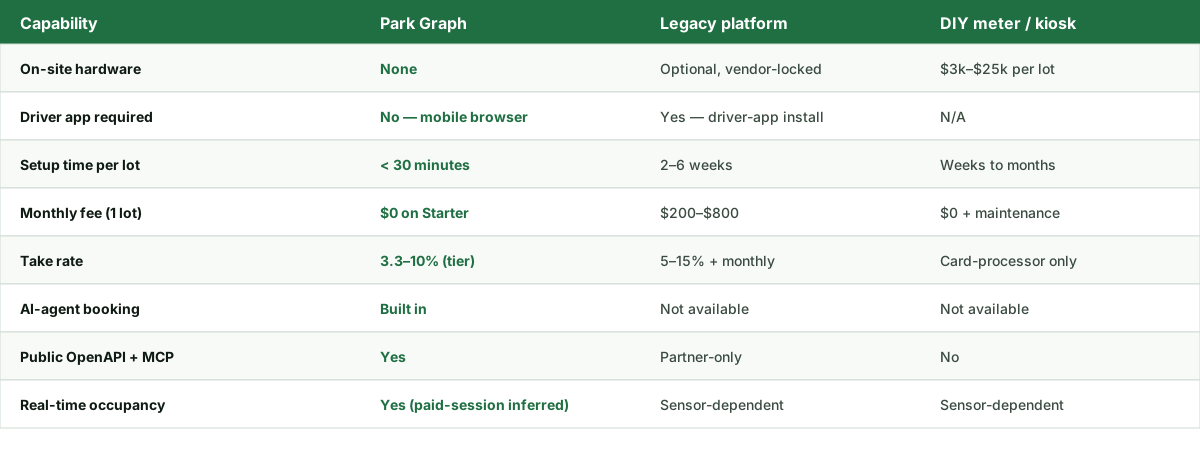
The pricing and revenue guides cover the part that actually moves the number on the page: dynamic pricing. Rates respond to time of day, day of week, occupancy, and nearby events, all governed by rules the operator sets with floor and ceiling guardrails so prices never run away. Because Park Graph derives occupancy from paid sessions rather than per-space sensors, the same data that bills the driver also feeds the pricing engine and the analytics dashboard — one signal, several uses, no extra hardware.
Read the digital parking meter and contactless parking guides for the driver-facing mechanics, then the revenue and analytics guides for how operators turn that activity into yield.
AI agents, APIs, and being discoverable
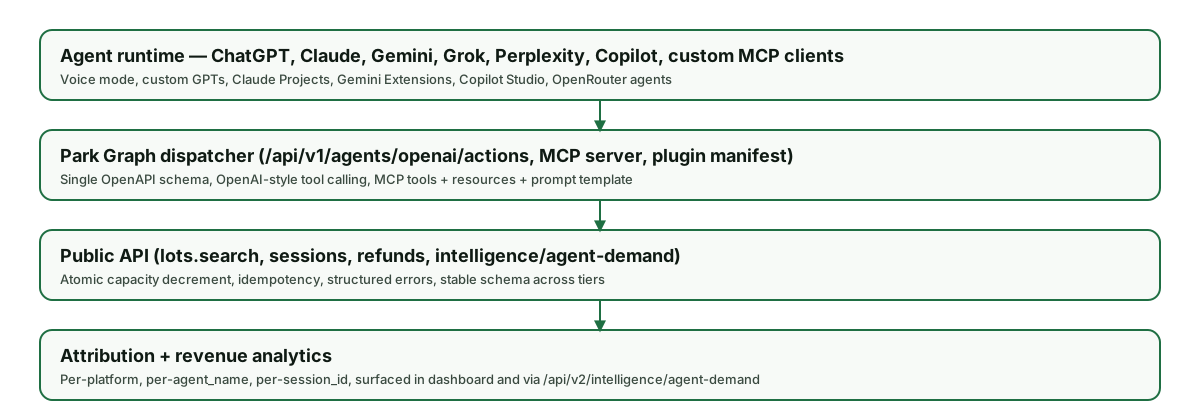
The newest topics in this cluster are about discovery. Drivers increasingly ask an AI assistant — ChatGPT, Perplexity, Gemini, Copilot — to find and book parking, and they expect mapping platforms to show availability before they arrive. A lot that exists only as a sign on a fence is invisible to those systems. The AI and API guides explain how Park Graph publishes each lot through a public API, an MCP server, and ChatGPT Actions so that both human-driven apps and autonomous agents can find it, check live rates, and complete a booking.
This is the structural difference that legacy platforms cannot easily match: API access on most legacy systems is gated to certified partners under NDA, and real-time data depends on sensor hardware. A software-first operation exposes the same data it already collects, to anyone building on it, as a standard part of the platform. The AI parking management and automated parking solutions guides go deeper on how booking, pricing, and support automation work in practice, and the comparison hub lines up Park Graph against specific competitors.
Ready to modernize your parking?
Get started in minutes. No hardware required. Generate your first QR code for free.