18-month commercial high-rise
GC sets up a temporary 240-space lot adjacent to the site. Sub-by-sub billing, daily flat rate. Project owner sees cost by trade in the monthly review.
Per-project billing
Vertical solution
Construction yard parking that reconciles to the project, not the lot. Construction parking is operationally messy: subcontractors come and go on weekly rotations, the lot itself is temporary, and the project owner needs cost-per-project reporting that no off-the-shelf parking platform provides. Five issues showed up in every general-contractor conversation.
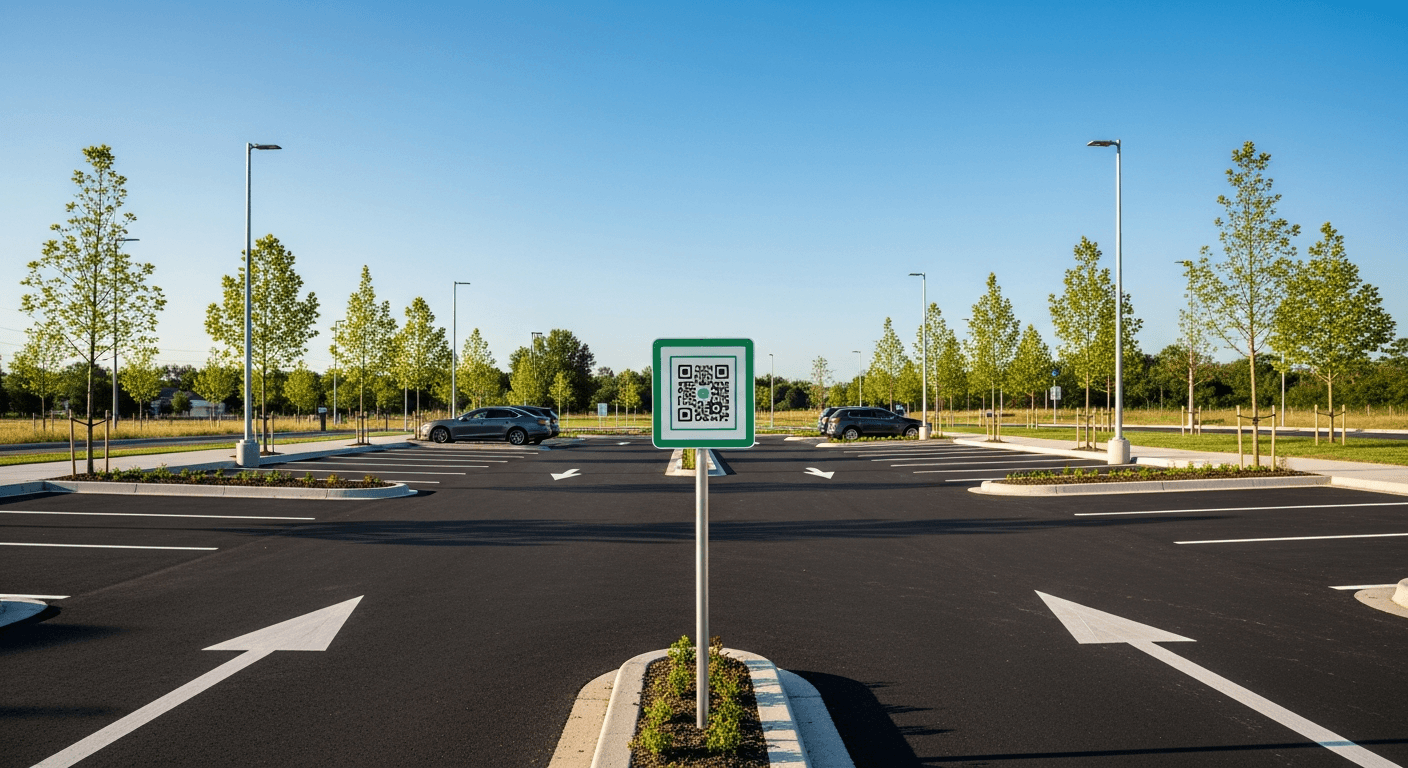
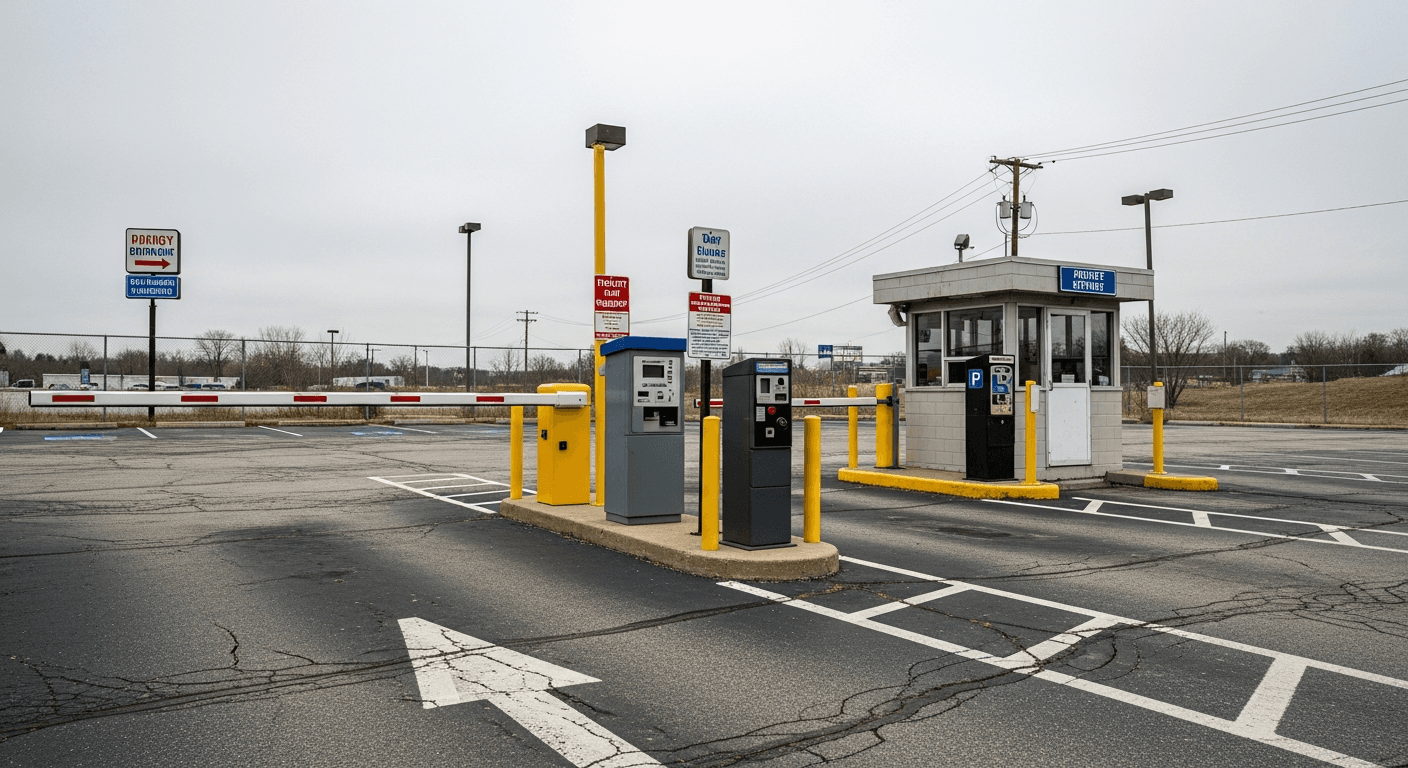
Construction parking is mostly invisible until something breaks. Crews park where they can; the foreman counts vehicles on a clipboard; the GC pays the lot owner monthly; and the project owner gets a single line item on the cost report. When the lot is over-counted, the owner overpays. When it's under-counted, the lot owner walks. Either way the operations team eats the difference.
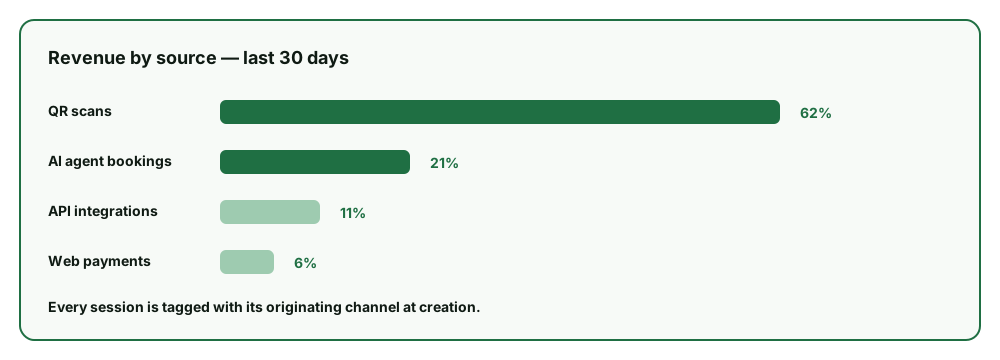
Park Graph replaces the clipboard with a QR scan and replaces the monthly lump-sum invoice with per-sub, per-day reporting that ties back to a project ID. The general contractor (the operator) sees usage in real time. The subcontractor (the bill-receiver) sees their crews' check-ins and can dispute on the spot if a crew didn't actually park there. The project owner (the bill-payer) sees per-trade cost in their monthly review.
The deployment model fits the construction lifecycle: site setup in under a day, no electrical or kiosk install, month-to-month contract with no early-termination fee. When the project closes, the parking site closes — no vendor service call, no $25k cancellation fee.
| Pain today | What it costs you | How Park Graph fixes it |
|---|---|---|
| Foreman counts crew vehicles on a clipboard each morning | 30-60 min/day, missed counts, billing disputes | QR check-in. Each crew vehicle scans on arrival; the dashboard reflects headcount in real time. |
| Subcontractor billing is reconciled against weekly invoices, not real usage | Disputed invoices, slow payment cycles | Per-sub session reporting. Each sub gets a weekly statement of their crews' parking usage. |
| Temporary site needs parking on day 1 but no electrical to run a kiosk | Crew parks on the street, citations, neighbour complaints | Park Graph needs no electrical. A printed QR sign on a 2x4 is the only physical install. |
| Project owner cannot see parking cost by phase or trade | Cost-overrun surprises in monthly project reviews | Per-project tagging in dashboard. Filter usage by trade, phase, or sub for instant cost reporting. |
| Lot is decommissioned at project close; vendor wants a contract termination fee | Often $5k-$25k to end vendor contract early | Park Graph month-to-month. End the contract the day the project closes. No fee. |
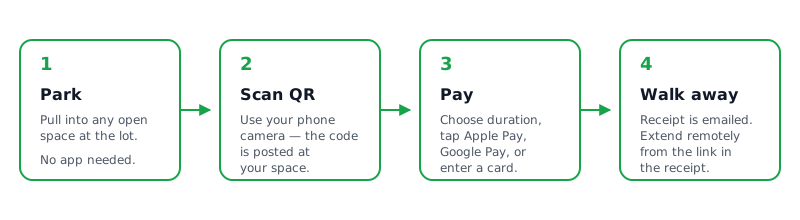
A subcontractor's crew rolls up to the site at 6am. Each vehicle scans the QR sign at the gate. The Park Graph payment page loads with the project name and the daily rate, asks which sub the crew works for (or auto-fills if the licence plate is recognised from a previous day), and posts a daily-rate session against that sub's account.
The foreman opens the dashboard on their phone and sees crew headcount in real time. No clipboard, no morning roll-call. If a crew didn't show up, the dashboard reflects it; if a crew shows up that wasn't expected, the dashboard reflects that too.
Every Friday Park Graph emails each subcontractor a weekly statement: how many crew-days were billed, the total amount, and the per-vehicle breakdown. Disputes are rare because every session is timestamped and licence-plate-tagged. The GC sees per-sub roll-up; the owner sees per-trade roll-up.
Site name, address, project ID, expected start and end dates. Park Graph generates a project-specific dashboard view.
Set a flat daily rate (most common: $5-$15/day) or per-trade rates if subs are billed differently.
Generate a print-ready QR sign with the project name, rate, and check-in instructions. Ships in 3-5 days or print on-site.
Email a one-pager to each subcontractor with the project's QR scan link. Crews scan once on first arrival; daily check-in is automatic.
Each Friday, Park Graph emails every sub their weekly parking statement. Disputes (rare) handled inside the dashboard.
Pause the site in the dashboard. Final invoices auto-generate. No vendor service call required.
Most construction yard parking deployments are live within a day. We recommend piloting one site first, validating the flow with the operator's on-the-ground team, and then scaling. Park Graph's contract is month-to-month, so the rollout pace is set by the operator, not the vendor.
GC sets up a temporary 240-space lot adjacent to the site. Sub-by-sub billing, daily flat rate. Project owner sees cost by trade in the monthly review.
Per-project billing
Mobile crew parks at staging yards along a 14-mile project. Each yard gets its own QR sign; crews scan on arrival regardless of which staging yard they're at that day.
Multi-site project
Hospital renovation. Construction crew parks in a contractor-only sub-lot of the hospital garage, billed back to the GC monthly.
Sub-lot billing
Permanent industrial site with rotating contractor crews. Park Graph differentiates employees (free, badge-validated) from contractors (billed daily).
Mixed-population site
Summer paving project runs June-September. Park Graph site activates June 1, deactivates September 30. No annual contract.
Seasonal site
Master-planned community with three construction phases over 4 years. Park Graph configures each phase as its own project with its own reporting.
Phase tagging
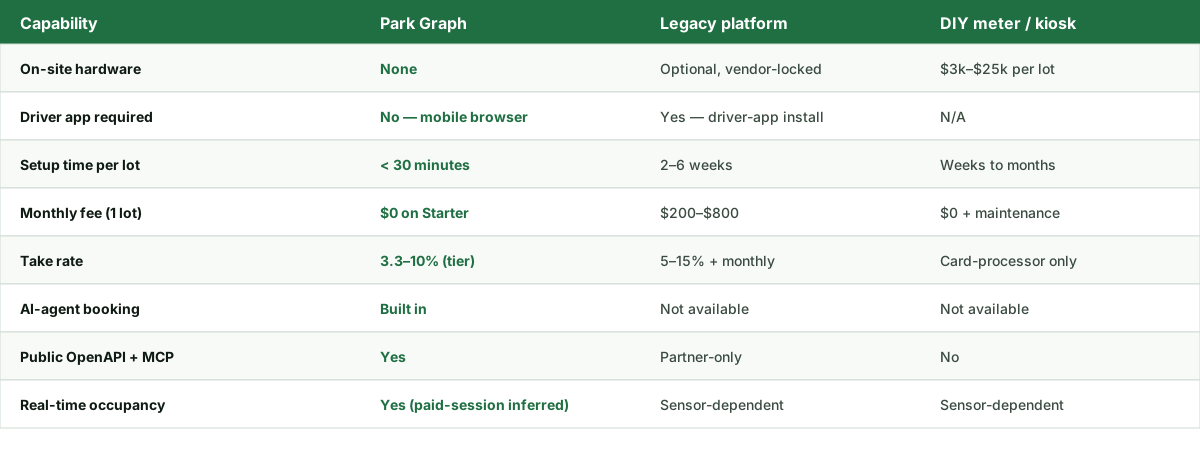
| Capability | Park Graph | Legacy parking platform | DIY / hardware-based |
|---|---|---|---|
| Hardware required on site | None — printed QR sign on 2x4 | Kiosk + electrical | Kiosk + electrical |
| Per-project cost tagging | Native | Custom configuration | Spreadsheets |
| Per-subcontractor billing | Weekly statements per sub | Vendor extra-cost module | Hand-counted invoices |
| Month-to-month contract | Yes | 12-36 month minimum | N/A |
| Setup time per site | <1 day | 2-6 weeks | Days plus electrical install |
| Take rate | 3.3-10% (tier-dependent) | 8-15% + monthly | Card-processor fees only |
| Decommission cost at project close | $0 | $5k-$25k early-termination fee | $0 |
| Crew SMS for safety alerts | Built in | Custom development | Not available |
The legacy column generalises the experience of working with a vertical-specific legacy vendor. Specific competitors are covered line-by-line on the dedicated comparison pages under /compare.
The map below shows the metro markets and corridors Park Graph is targeting for construction yard parking growth in 2026 and beyond. Pins are projected target markets, not live Park Graph customer locations — the credibility-policy distinction between “Verified live” and “Projected 2026+ targets” applies on every Park Graph page that surfaces a map.
Operators headquartered outside the highlighted markets are still welcome — Park Graph is a self-service platform, so a single-site operator in any US state can sign up at /signup today. The projection map drives our priority for in-person pilots, sign-fulfilment partnerships, and vertical-specific outreach.
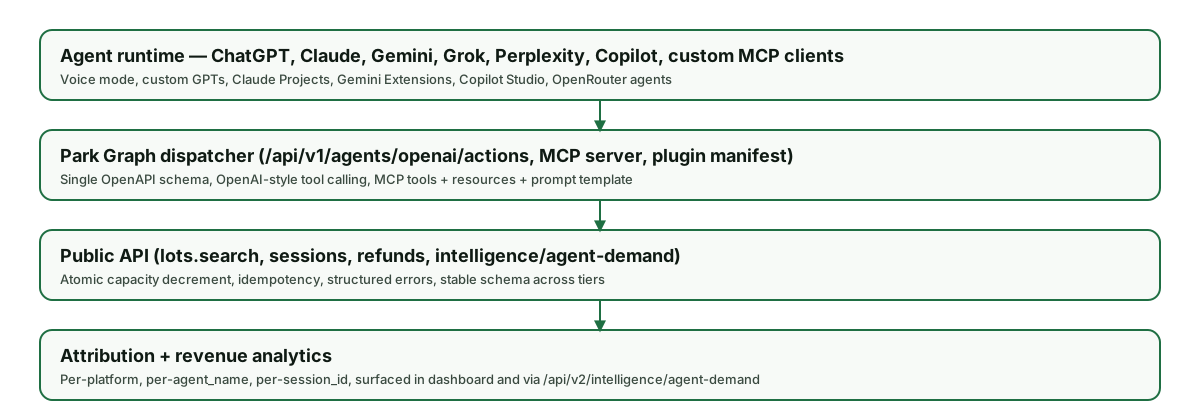
Construction project owners increasingly want AI-driven cost reporting. Park Graph's API exposes per-project, per-sub, per-day parking cost in a structured format that plugs directly into Procore, Autodesk Construction Cloud, Sage 300, and custom owner reporting. AI agents on the owner's side can pull parking cost into a project review automatically.
Sub-facing agents are less common in this vertical, but worth flagging: when a sub's accounts-payable team asks ChatGPT "what was our parking cost on the Lakeshore project last month?", Park Graph's structured-data feed makes the answer immediate and accurate.
Crew lead: 'Are we billed for half-days?'
Park Graph: 'No — flat $8/day per vehicle for crews on the Lakeshore Tower project. Reply STATEMENT for this week's running total.'
Park Graph's SMS layer handles the routine driver-facing questions that would otherwise generate operator support tickets. The exchange above is a real example from the construction yard parking vertical; AI handles roughly 90% of these conversations end-to-end with no human escalation.
Why construction yard parking operators switch
Vs. legacy kiosk install
Eliminates clipboard headcount
Vs. $5k-$25k vendor early-termination fee
Numbers are typical first-year deltas reported by Park Graph operators in this vertical relative to their previous platform.
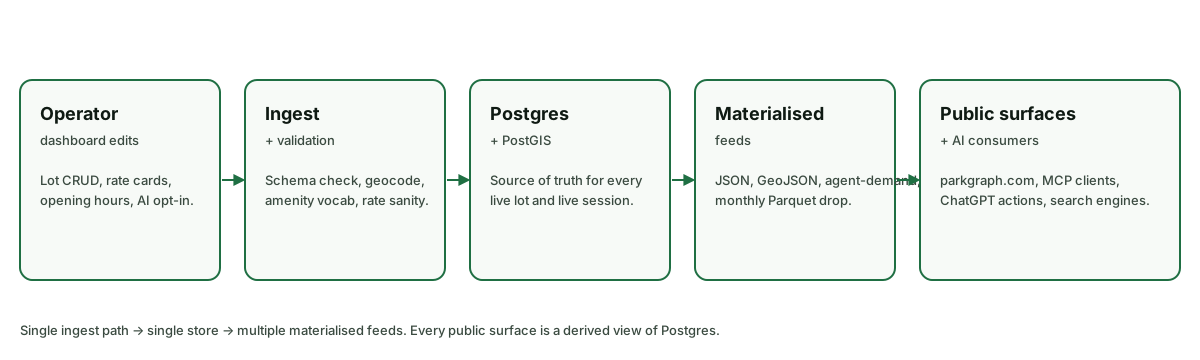
The economics behind Park Graph in this vertical are simple to model. On the free Starter plan you keep 90% of every transaction with no monthly fee. On Pro at $499/month you keep 95% of every transaction. On Enterprise you keep 96.7%. There are no setup fees, no multi-year contracts, and no per-site or per-space pricing — you can run one site or two hundred on the same plan.
The calculator below estimates monthly take-home revenue across Starter, Pro, and Enterprise plans for any site size, hourly rate, occupancy, and operating-hour configuration you choose. Numbers update live as you adjust the inputs.
0%
Take-home rate (Enterprise)
0 day
Typical site setup
$0
Hardware required
0
AI agent platforms supported
Projected targets reflect 2026+ planning and internal pilot modeling — not live customer outcomes.
See how much you could earn with Park Graph.
Projected monthly revenue
$86,400
Starter
Platform cost
$8,640/mo
Your net revenue
$77,760/mo
Pro
Best valuePlatform cost
$4,819/mo
Your net revenue
$81,581/mo
Enterprise
Platform cost
$5,350/mo
Your net revenue
$81,050/mo
PCI DSS Level 1
Card data tokenized by Stripe; Park Graph never sees raw card numbers.
Aligned with SOC 2 controls
Audit window opens Q3 2026. Annual reports available under NDA on request.
Encrypted at rest + in transit
AES-256 at rest, TLS 1.3 in transit, KMS-managed keys.
Vertical-specific data handling
Construction sites often have OSHA-relevant safety alerting. Park Graph's SMS layer can broadcast a safety alert to every active session at a site (e.g. 'site closing in 30 min for crane lift') without exposing crew phone numbers to the GC.
Free forever on Starter. No credit card to begin. Cancel any time.
Pricing, event surge curves, and on-site context for construction yard parking vary by metro. The pages below are the city-specific playbooks — same Park Graph platform, tuned to the local rate baseline and demand calendar.
The installation
No gate to wire. No meter to bolt down. No technician to schedule. Watch an owner take a lot live in four steps — the last one is a real code, mounted on a real post.
 1
1Enter your lot name, spaces, and rate. Park Graph mints a branded QR code that links straight to your payment page.
 2
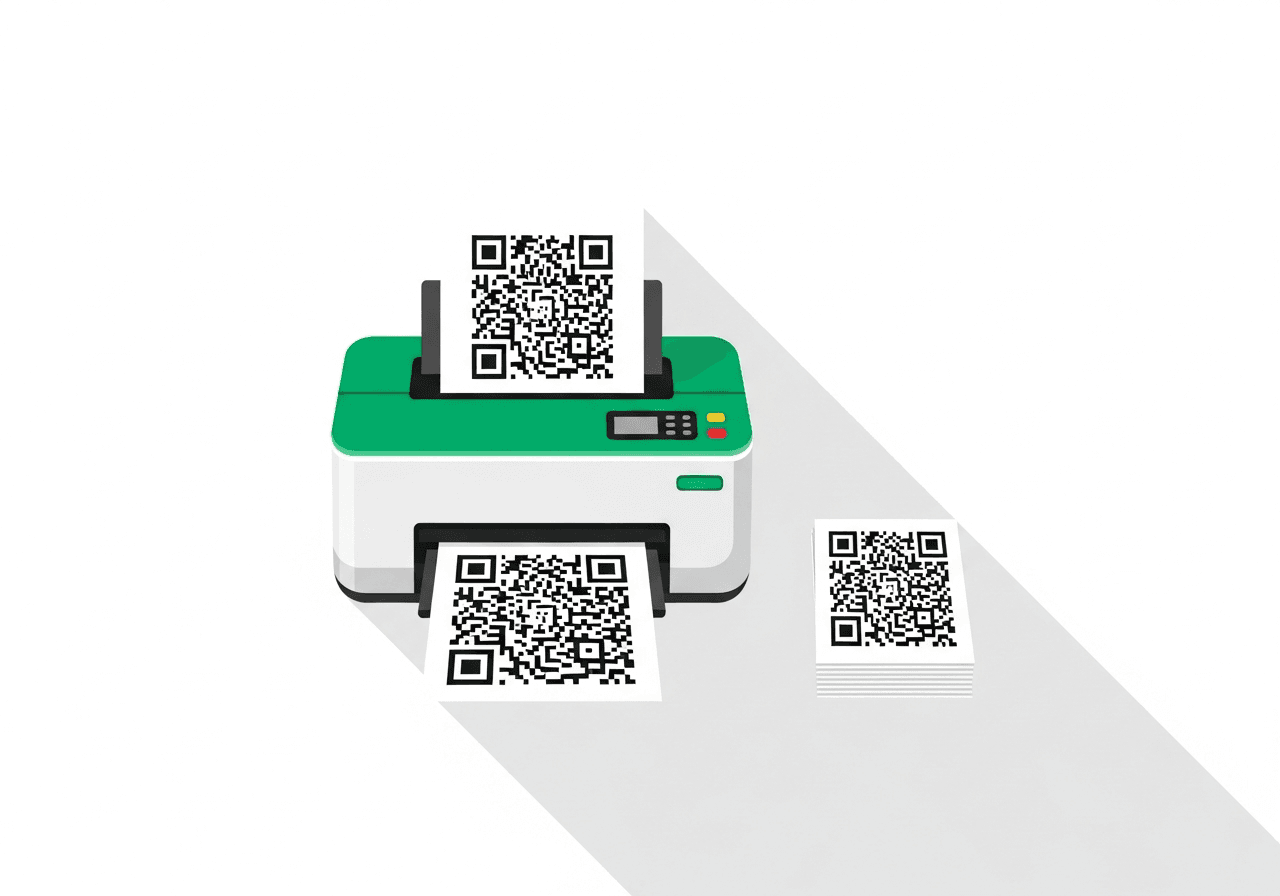
2Send it to any standard printer. Laminate the sheet for weather protection — that is your entire hardware bill.
 3
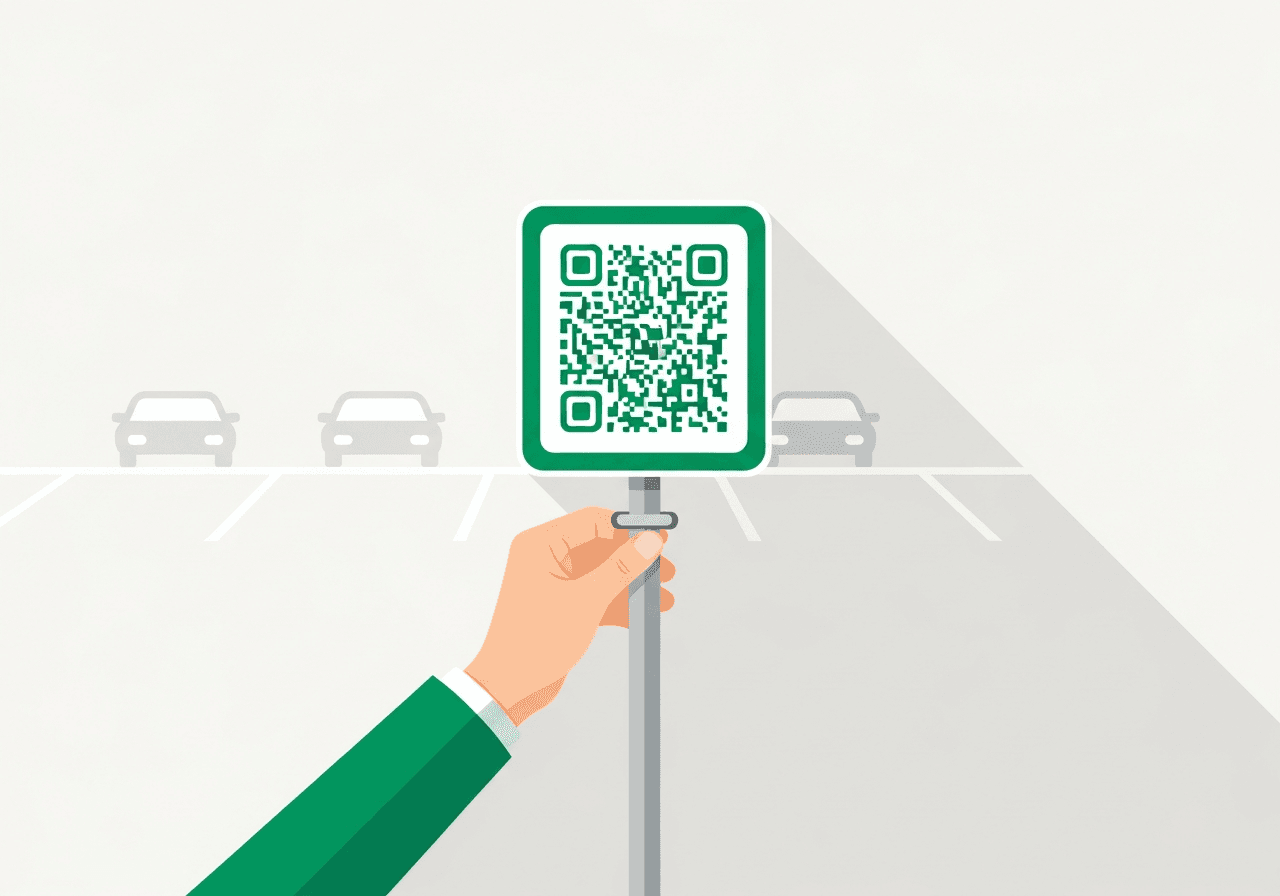
3Mount it on a post at the entrance and any major pedestrian path. No gates, no wiring, no installer visit.
 4
4Drivers scan and pay; revenue lands in your dashboard in real time and in your bank within two business days.