Industry6 min read
Why Parking Meters Are Dying (and What Replaces Them)
Traditional parking meters cost $500-$5,000 each, break constantly, and frustrate drivers. QR-based payment systems eliminate all of these problems at zero hardware cost.
Insights on parking technology, revenue optimization, and the agent-first future.
Traditional parking meters cost $500-$5,000 each, break constantly, and frustrate drivers. QR-based payment systems eliminate all of these problems at zero hardware cost.
When someone tells ChatGPT to find parking near a restaurant, what happens? The parking lots that are accessible to AI agents win. The ones that are not, lose.
Event surge, occupancy-based adjustments, peak hour multipliers, and weekend rates. How to maximize revenue per space without alienating drivers.
Zero hardware cost. 30-second payment flow. 95% payment compliance. Real operators share their numbers after switching to QR-based payments.
Hardware gates had their era. Consumer apps had theirs. The next layer is infrastructure — a universal protocol that connects every lot to every AI, every app, and every vehicle.
The Park Graph blog exists to help parking operators make better decisions about technology, pricing, and the rapidly changing way drivers discover and pay for parking. We write from the perspective of a platform that removes hardware from the equation entirely: instead of meters, kiosks, and gate arms, a single QR code connects a lot to a payment flow, a dynamic pricing engine, and an operator dashboard. Our articles fall into a few recurring categories so you can follow the themes that matter most to your operation.
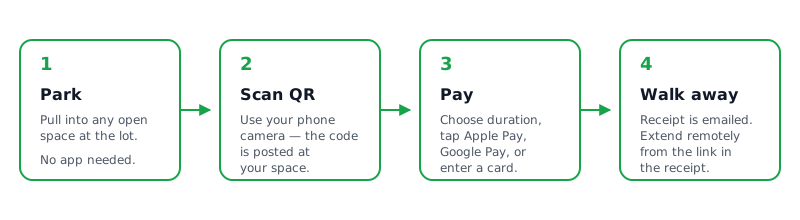
We track the long arc away from hardware-heavy parking toward software-defined lots: why meters and pay stations are expensive to maintain, how contactless payment changed driver expectations, and what it means for operators when the curb becomes programmable. These pieces are written for owners and managers who want context, not hype.
A growing share of parking demand starts with a question to an assistant rather than a search box. We explain how AI agents discover and book parking through Park Graph's public API, MCP server, and ChatGPT Actions, and why lots that are readable by machines capture demand that invisible lots never see.
Dynamic pricing is one of the biggest levers an operator controls. Our revenue articles cover occupancy-based surge, event-driven demand, time-of-day adjustments, and weekend rates — the practical mechanics of charging the right price without alienating drivers, all configured from one dashboard.
Finally, we step back to the bigger picture: parking as infrastructure and as a protocol that connects every lot to every app, assistant, and vehicle. These vision pieces sit alongside grounded operator perspectives so the strategy always stays connected to day-to-day reality.
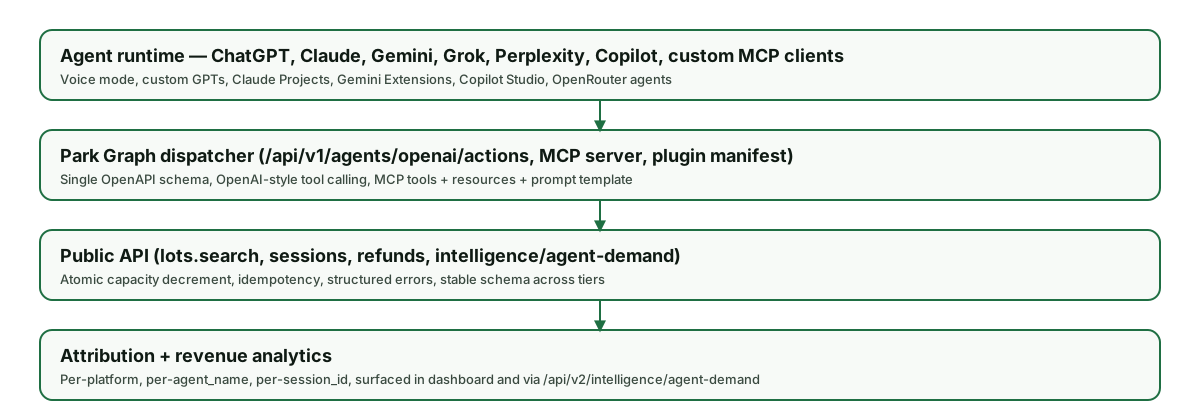
Our readers are parking operators, facility managers, and the developers who integrate parking into other products. That shapes how we write: practical, specific, and grounded in how Park Graph actually works. When we cover dynamic pricing, we talk about the real levers — occupancy thresholds, time-of-day windows, weekend rates, and event surge — and how to tune them without driving customers away. When we cover AI agents, we explain the concrete mechanics of discovery and booking through a public API rather than hand-waving about the future.
We also try to be honest about trade-offs. Moving off hardware meters removes maintenance and capital cost, but it asks operators to think differently about signage, payment compliance, and how they communicate rates at the curb. Making a lot discoverable to AI assistants opens a new demand channel, but it rewards operators who keep their availability and pricing accurate. The blog exists to walk through those decisions with you, drawing on how the platform is built and what we see operators wrestle with in the field.
New articles are added on a regular cadence, and we revisit older posts as the product and the broader parking landscape evolve. If a topic you care about is not covered yet, the Contact page is the best way to suggest it — many of our most useful pieces started as a question from an operator. You can also pair the blog with the Tutorials hub when you want to move from understanding a concept to actually configuring it in your dashboard.