The parking meter that never breaks
Physical meters cost $500-$5,000 each. They jam, they break, they need cellular plans. A Park Graph QR code does everything a meter does — and more — for the cost of printing a piece of paper.
Physical meters vs. digital meters
A single-space parking meter costs $400-$800 installed. A multi-space pay station costs $15,000-$30,000. Both require power, cellular connectivity ($15-25/month), and regular maintenance (coin collection, receipt paper, touchscreen repairs). The average meter has a 7-year lifespan before it needs full replacement.
A Park Graph digital meter is a laminated QR code. Cost: approximately $0.15. Lifespan: indefinite (print a new one if damaged). Connectivity: the driver's own phone. Maintenance: zero. It accepts Apple Pay, Google Pay, and credit cards — no coins, no cash.
Beyond replacing the payment function, the digital meter adds capabilities that physical meters cannot provide: real-time occupancy data, dynamic pricing, session extensions from anywhere, AI chat support, and integration with navigation apps and AI agents.
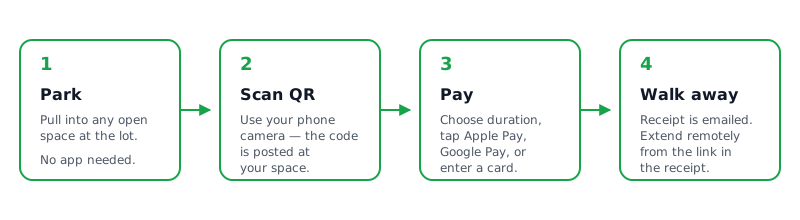
Anatomy of a digital meter
A physical meter concentrates every function — payment, timing, enforcement signaling, and rate display — into a single roadside device that has to be powered, connected, and serviced. A digital meter unbundles those functions and moves them to software. The only physical artifact left on the street is a laminated QR code, and even that is disposable: if it is damaged, defaced, or stolen, the operator prints a replacement for cents rather than scheduling a field technician and waiting on a part.
Because the payment logic lives in software, the digital meter is never out of date. Rate changes that would require a technician to reprogram a fleet of physical meters are made once in the dashboard and apply instantly across every space. There is no firmware to push, no coin mechanism to recalibrate, and no receipt paper to refill. The meter cannot jam, freeze in winter, or lose its cellular connection, because there is no meter — only a sign and the driver's phone.
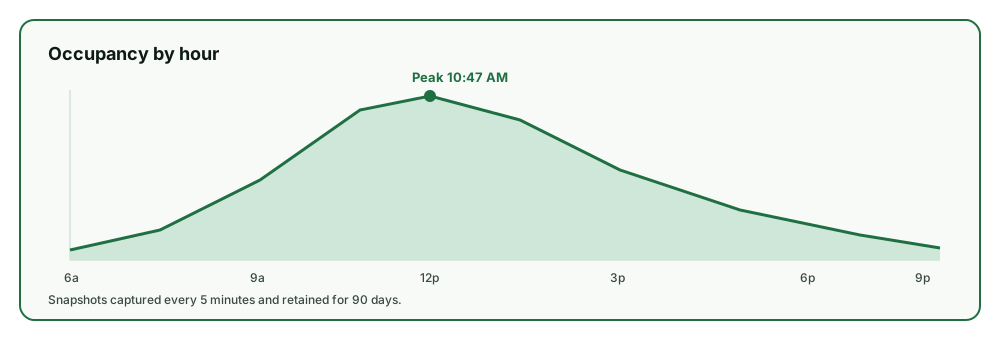
The digital meter also closes the enforcement gap that paper-and-coin meters leave open. Every paid session is recorded in real time, so enforcement staff can check a plate or space against live session data instead of squinting at a meter face or a windshield receipt. That same session record powers occupancy reporting and dynamic pricing, which means a single scan-to-pay event feeds payment, enforcement, analytics, and pricing at once.
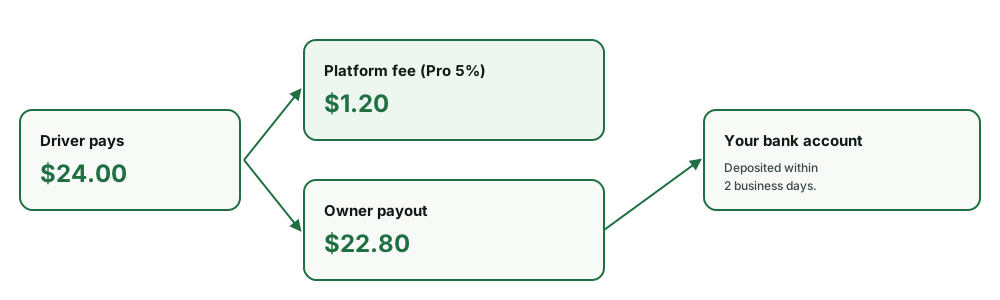
Physical meters also create a quiet cash-handling burden that rarely shows up on the sticker price. Coins have to be collected on a route, counted, reconciled, and deposited, and every one of those steps is an opportunity for shrinkage and labor cost. A digital meter removes the cash path entirely: payments settle through Stripe and land in the operator's account on a normal payout schedule, with a clean digital record for every transaction. There is nothing to empty, nothing to count, and nothing to drive around the city to collect.
For drivers, the experience is simply better, which is what ultimately lifts collection rates. There is no hunting for exact change, no broken card reader, and no guessing how long a meeting will run. A driver scans the code, pays in seconds with a wallet they already trust, and can extend the session from their phone without walking back to the curb. When the rules are clear and paying is frictionless, more people pay — and the operator captures revenue that a jammed or out-of-service meter would have lost.
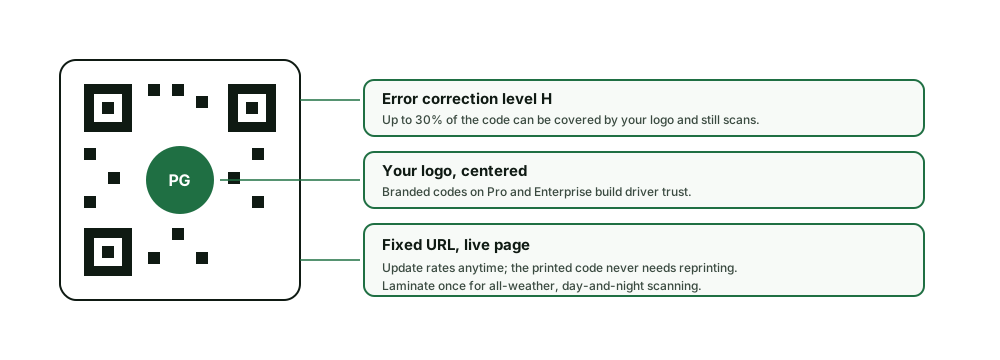
See how we compare
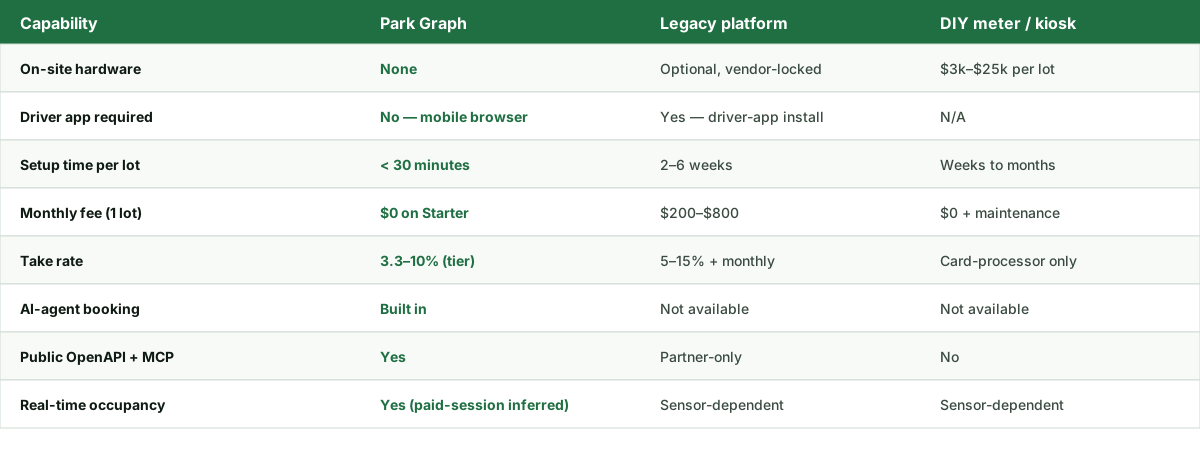
How Park Graph compares
The only parking platform built for the AI era.
| Feature | Park Graph | SpotHero | SKIDATA |
|---|---|---|---|
| QR-based payments | |||
| No hardware required | |||
| AI agent protocol | |||
| Real-time analytics | |||
| Dynamic pricing | |||
| API access | |||
| White-label | |||
| Setup time | 5 min | 2-4 weeks | 6-12 months |
| Monthly cost | From $0 | 15-30% | $5K+ |
| Transaction fee | 3.3-10% | 15-30% | Varies |
Create your digital meter
Try it now
Generate a QR code for your lot. No account required.
QR preview
Meters vs. QR codes
$0
Cost per QR code
$0
Cost per meter avoided (industry estimate)
0 min
Setup time
0%
More revenue collected (target)
Projected targets reflect 2026+ planning and internal pilot modeling — not live customer outcomes.
Replace your meters for free
Starter plan is free forever. No hardware needed.