Park Graph is the airport parking management software airport parking operators in Philadelphia, PA use to modernize their lots — from Center City and Old City to the metro edge — without on-site kiosks, gate hardware, or month-long procurement cycles. QR-first payments, dynamic pricing tuned to Philadelphia's demand, and AI-agent visibility on ChatGPT and Gemini ship in the same plan.
Why airport parking operators in Philadelphia choose Park Graph
Park Graph runs the entire airport parking ledger — economy, premium covered, valet, and off-airport shuttle — on a single platform. Airport authorities, FBOs, and third-party off-airport operators all use the same configuration model: lot, sub-lot, daily cap, multi-day window. The QR-first design replaces the booth, the meter, and the gate; drivers scan the lane sign on the way in and pay before they reach the terminal. Multi-day sessions, pre-bookings, and AI-agent reservations are first-class so Tuesday-night business travel and Friday-night family departures both work without friction.
In Philadelphia, the airport parking operators we work with span Center City, Old City, and University City and the demand patterns that follow Eagles games, Phillies games, and 76ers games. Philadelphia's metro population of 1,603,797 drives the kind of weekday-baseline-plus-event-surge profile that Park Graph was built to optimise. The platform treats every airport lot as a configurable inventory unit with its own rate sheet, sub-lots, capacity, and pre-buy window — so a single operator account can run a flagship airport lot downtown alongside a smaller satellite without juggling two vendors.
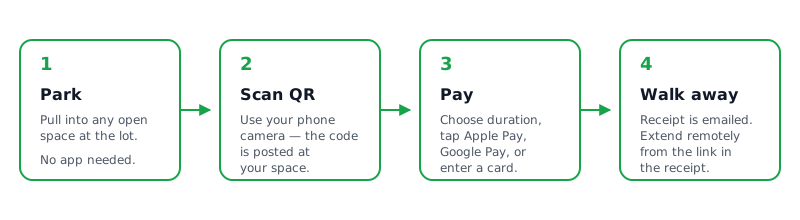
The walk-up payment flow airport parking operators in Philadelphia deploy in minutes — no app, no gate, no hardware.
Philadelphia airport parking at a glance
The numbers below frame the philadelphia market for airport parking operators. We surface them on every airport lot configuration screen so on-duty managers can benchmark their lot against the metro baseline at a glance.
Hourly rate (avg)
$16
Philadelphia downtown baseline
Daily rate (avg)
$38
Single-day public lot
Monthly permit
$280
Reserved permit holder
Event surge
2.0×
Peak-window multiplier
Every scan and session in Philadelphia feeds the same real-time pipeline behind these benchmarks.
How a airport lot day in Philadelphia runs on Park Graph
A driver pulling into the economy lot scans the lane QR on the entrance pylon. The Park Graph payment page loads with the airport's brand, the sub-lot, and the per-day rate; multi-day windows let the driver pay for a five-day trip in one transaction. The shuttle dispatcher receives an SMS heads-up that the driver has parked, with their requested terminal and group size; the dispatch ETA goes back to the driver's phone. When the driver returns, the session is already closed (or auto-extends if their flight was delayed) and the receipt is in their email.
In Philadelphia specifically, the day-of operations layer leans on three pieces of city context: peak-event windows tied to Eagles games and Phillies games, a typical hourly rate of $16 that climbs 100% during major events, and the airport spillover from Philadelphia International. The Park Graph dashboard surfaces all three as live dials so the on-duty manager at a Philadelphia airport lot can adjust pricing or open overflow capacity from a phone in seconds.
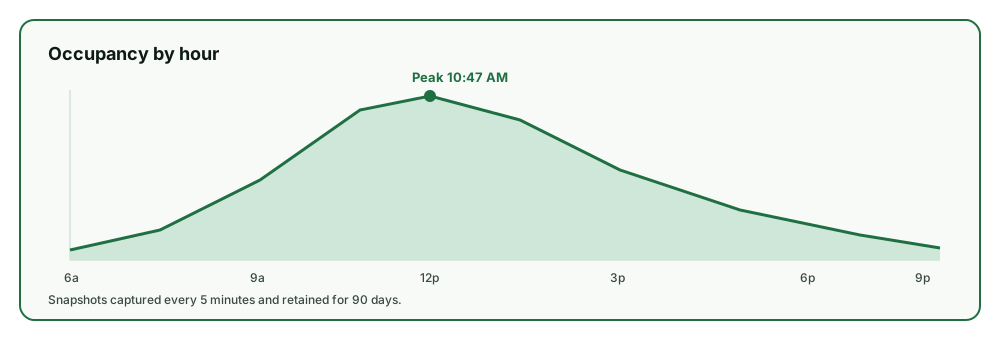
A representative Philadelphia day — occupancy and dynamic pricing moving together across operating hours.
Use cases for airport parking operators in Philadelphia
Long-stay economy lot
Replace the booth with a QR sign on the lane pylon. Multi-day pricing, daily caps, and pre-booking all run from a single sub-lot config. Tested with airport parking operators in Philadelphia, PA on the typical tier-1 demand profile.
Multi-day pricing
Premium covered garage
Keep the gate for capacity control but kill the kiosk; drivers pay via QR while the gate opens on the back of the payment confirmation.
Gate-friendly
Valet drop-and-go
Valet attendants tag the vehicle on a phone; the driver receives a return-time SMS and pays before walking back to the curb.
Valet ledger
Off-airport shuttle operator
Compete with SpotHero and ParkWhiz on price and discovery without a 30%+ marketplace take. Park Graph is the operator's site, not a third-party storefront.
Owner-economics
Cell-phone waiting lot
Free for the first 30 minutes; auto-billed thereafter. Eliminates the loitering problem without adding staffing.
Free + grace
Crew + employee permits
Airline crew, TSA, and contractor permits all live on a licence plate or virtual permit; enforcement officers see status when they scan.
Permit unification
What Philadelphia airport parking economics look like
On a representative Philadelphia airport lot of 50 spaces running at 65% average occupancy and the metro's hourly rate of $16, base monthly revenue lands around $187,200. Park Graph's dynamic pricing engine — which leans on Philadelphia's event calendar (Eagles games and Phillies games) and historical demand curves — typically lifts that to ~$234,000/month, or roughly $561,600 of additional annual revenue from the same physical inventory.
The lift compounds because three things move at once: drive-offs go to near-zero (QR settles before the driver leaves), peak-event windows price correctly without manual operator intervention, and AI-agent bookings add an organic channel that historically did not exist for airports. Most Philadelphia operators see payback inside a single quarter — and the absence of any per-stall licensing fee means the upside is almost entirely operator margin.
Representative monthly economics
Base monthly
$187,200
50 spaces · 65% occ · $16/hr
With dynamic pricing
$234,000
+25% typical lift
Annual uplift
$561,600
Same physical lot
Illustrative projection for Philadelphia, PA airport lot operators. Actual results depend on lot size, occupancy, and pricing strategy.
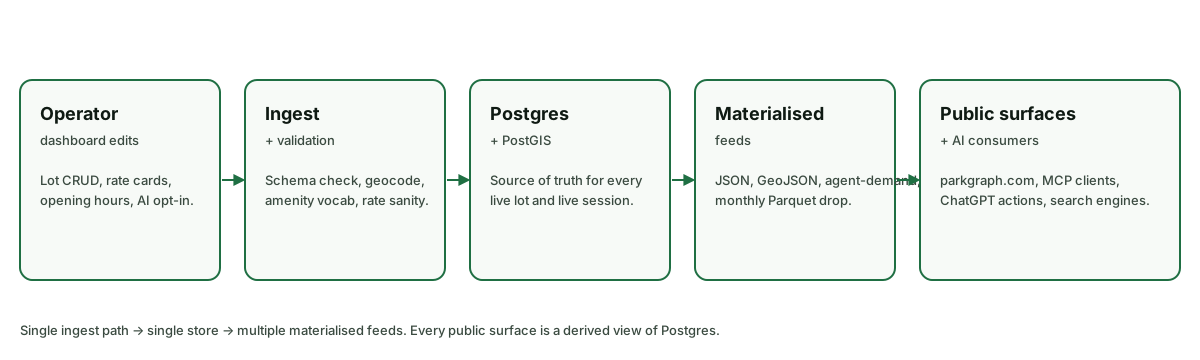
Where the monthly numbers come from in Philadelphia — base sessions, extensions, agent bookings, and dynamic-pricing uplift.
What changes for airport parking operators after rollout
Airports that move from booth-and-gate to QR-first see gate dwell drop from roughly 45 seconds per car to under 10. Staffing on the entrance lane is reduced or eliminated; revenue per stall climbs because pre-bookings fill mid-week troughs and surge windows capture peak holiday demand. The off-airport competitive set (SpotHero, ParkWhiz, The Parking Spot) is matched on driver experience without ceding the take-rate. AI-agent visibility on ChatGPT, Gemini, Perplexity, and Copilot adds a discovery channel that traditional booth-led airports simply do not have.
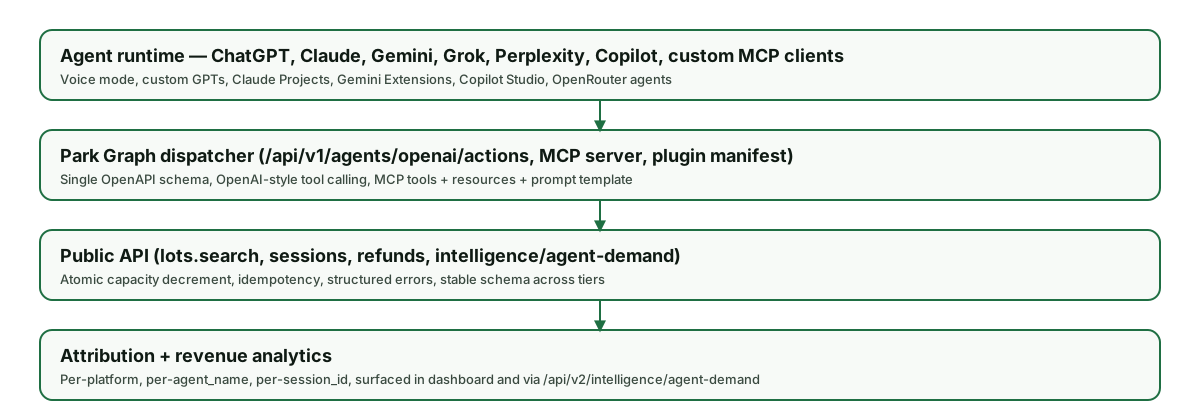
On the AI-agent side, Park Graph publishes Philadelphia inventory and rates to ChatGPT (GPT-5), Microsoft 365 Copilot, Google Gemini, Anthropic Claude (via MCP), Grok, and Perplexity Sonar Pro. When a traveller types "parking near Center City Philadelphia" into ChatGPT, the assistant can return your live availability and book on the user's behalf. For airport parking operators in Philadelphia, that's an organic discovery channel that does not exist on legacy kiosk-based platforms — and it compounds quickly because AI-agent traffic is the fastest-growing referral source for parking inventory in 2026.
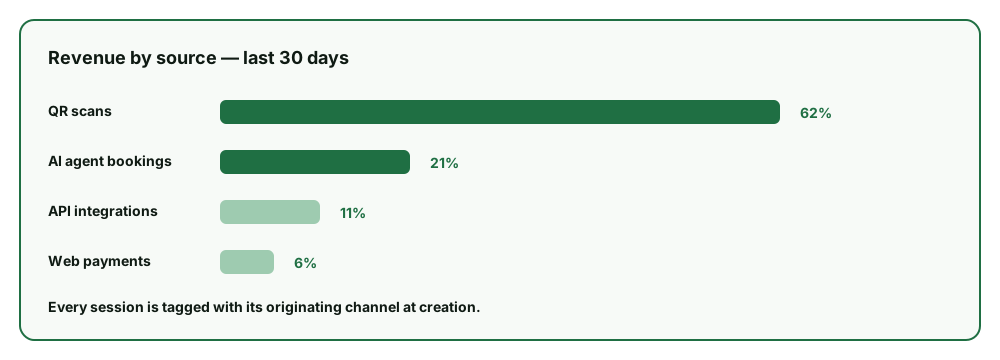
After rollout, the Philadelphia lot is discoverable and bookable by the AI assistants drivers already use.
Other Park Graph solutions in Philadelphia, PA
Park Graph runs every parking surface in Philadelphia on the same backend. If you operate across multiple verticals — for instance an airport authority that also runs the downtown convention centre's lot, or a hospital system with an attached medical office building — the same operator account covers all of them.
Park Graph publishes city-specific airport parking pages for the top metros below. Pricing, event surge curves, and on-site context vary by metro; the underlying platform is the same.
Yes. Multi-day windows are first-class. A driver can pay for a 5-day, 10-day, or 30-day trip in a single transaction with daily-cap pricing, and the session auto-extends if their flight is delayed past the booked return.
When a driver parks, an SMS goes to the shuttle dispatcher with the requested terminal and group size. Dispatch sends the ETA back to the driver's phone. This replaces the radio-and-clipboard dispatch flow that most economy lots still run.
Yes. Logo, primary colour, support email, and copy are configurable per operator account. The payment page lives at parkgraph.com but presents the airport's brand consistently.
Yes. Park Graph publishes airport parking inventory, rates, multi-day windows, and shuttle frequency to ChatGPT, Gemini, Perplexity, Grok, and Copilot. AI-agent bookings settle through Park Graph just like a direct QR booking.
Park Graph has no per-stall licensing fee in Philadelphia. Operators choose Starter (free, 10% per transaction), Pro ($495/mo, 5% per transaction, dynamic pricing included), or Enterprise ($2,495/mo, 3.3% per transaction, white-label, dedicated CSM). Most Philadelphia airports pay back the Pro tier inside the first month at the metro's typical $16/hr rate.
A single Philadelphia airport lot can be live in under an hour: create the operator account, define the lot's spaces and rate sheet, generate and print QR signs, and start collecting payments the same day. Multi-lot deployments across Philadelphia (e.g. a portfolio across Center City and Old City) typically roll out over 1-2 weeks.
Yes. Every Park Graph QR sign ships with the legally-required font sizes, contrast ratios, and tactile/braille options. The mobile payment page meets WCAG 2.1 AA standards. Philadelphia municipal sites and accessibility-mandated venues use Park Graph alongside their existing ADA signage program without retrofit.
Yes. Park Graph publishes Philadelphia airport lot inventory and live rates to ChatGPT, Gemini, Perplexity, Grok, Claude (via MCP), and Microsoft 365 Copilot. When a driver types "parking near Center City Philadelphia" or asks for parking near Eagles games, your lot can appear with availability and a one-tap booking link — no per-platform setup needed.
Yes. A single operator account supports unlimited lots across Philadelphia, PA (and nationwide). The dashboard rolls revenue, occupancy, and session data up to the portfolio level and lets you drill down to a single sub-lot. Multi-site operators in Philadelphia typically manage all locations from a single dashboard with role-based access for on-site managers.