Case study
Wins Parking: a 220-space airport lot and a 110-space yard, live in days
Airport lot
Wins Parking — Eagle County Airport (EGE)
- Spaces
- 220
- Went live
- 2025
- Setup time
- 2 days
- Revenue change
- +310%
- Scan-to-pay adoption
- 99%
- Bookings via AI agents
- 70%
Construction yard
Edwards Stoneyard
- Spaces
- 110
- Went live
- 2025
- Setup time
- 3 days
- Revenue change
- +250%
- Scan-to-pay adoption
- 80%
- Bookings via AI agents
- 67%
Figures are operator-reported by Wins Parking and authorized for publication. Revenue change is relative to the operator's prior setup; absolute dollar amounts and the exact go-live month were not disclosed.
The signage that replaced the gate
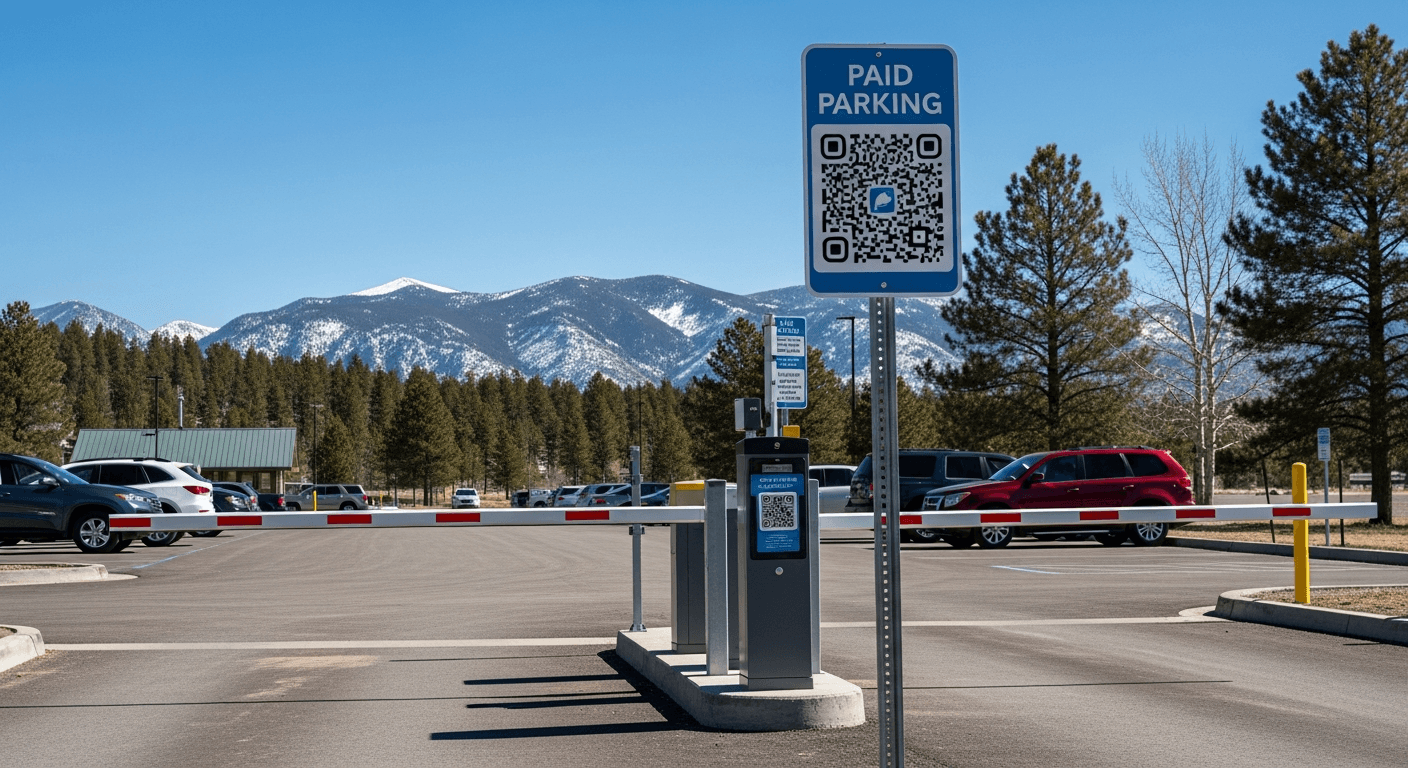
Each deployment swapped gate hardware and pay stations for a single weatherproof QR sign at the entrance. A driver scans it, pays in their browser, and is on their way — no app, no account, no ticket.
The airport lot: gate-free parking at Eagle County (EGE)
Airport parking has historically meant gates, ticket spitters, and a pay station with a line in front of it. Wins Parking took the opposite approach at its 220-space lot serving Eagle County Regional Airport: a printed Park Graph QR code at the entrance, no gate hardware, and a payment page that loads in a traveler's browser without an app or account. Setup took two days. The operator reported that scan-to-pay adoption reached 99% — nearly every paid session ran through the QR flow rather than a legacy fallback.
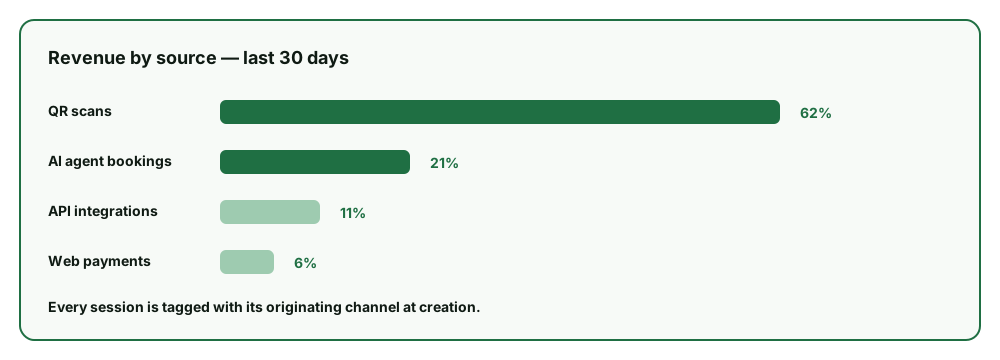
The larger surprise was the channel mix. Because the lot is published to Park Graph's agent-readable availability feed, a traveler asking an AI assistant to find airport parking can be routed straight to it. The operator reported that 70% of bookings came through AI agents, with the rest coming from on-site QR scans. Against the operator's prior setup, revenue increased 310%.
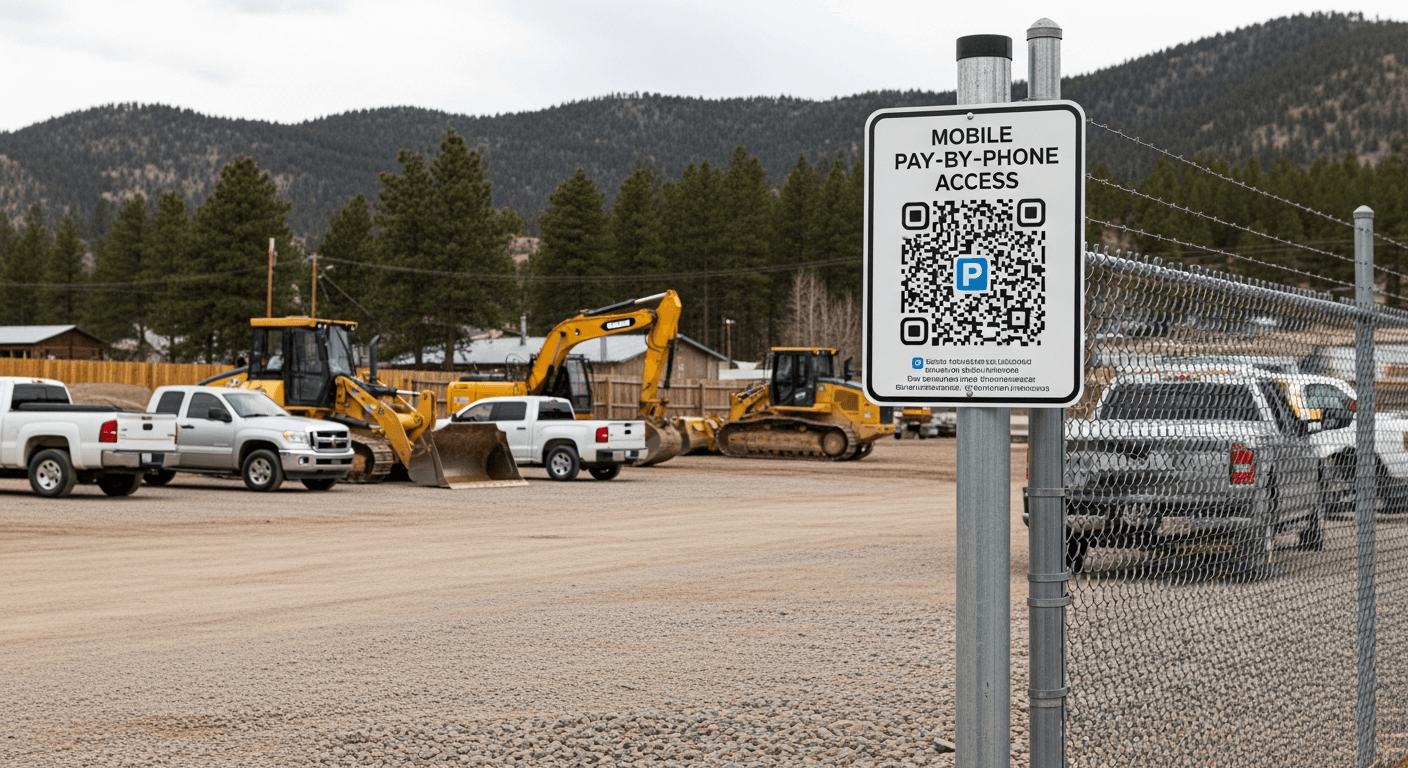
The construction yard: paid access in Edwards, Colorado
The second deployment is a 110-space construction yard in Edwards. Yards have different economics from airports — fewer, longer-dwell users and crews who need predictable access — but the same friction with hardware. Wins Parking deployed the same QR-first flow here and was live in three days. The operator reported 80% scan-to-pay adoption, 67% of bookings via AI agents, and a 250% increase in revenue versus its prior setup.
How these numbers were measured
We hold ourselves to a clear standard on how we publish case studies. The figures above are operator-reported by Wins Parking and authorized for publication. They reflect the operator's own before-and-after measurement of revenue, scan-to-pay adoption, and AI-agent booking share. We have not independently audited the underlying ledgers, so we present these as operator-reported rather than Stripe-verified. Revenue is stated as a percentage change relative to the prior setup because absolute dollar amounts and the exact go-live month were not disclosed for publication. A named, attributable operator quote is not included; we do not publish quotes we cannot attribute.
Explore the playbook behind these deployments
Frequently asked questions
- Are these figures verified?
- The metrics on this page are operator-reported and authorized for publication by Wins Parking. They reflect the operator's own measurement of revenue change, scan-to-pay adoption, and AI-agent booking share before and after switching to Park Graph. Revenue change is expressed as a percentage relative to the operator's prior setup; absolute dollar figures and the exact go-live month were not disclosed for publication.
- How long did each deployment take?
- The 220-space airport lot at Eagle County (EGE) was live in two days; the 110-space Edwards construction yard took three days. Both were hardware-free deployments — a printed QR code at the entrance replaced gates and meters, so there was no installation crew or pay-station lead time.