Case study
Mercy Ridge Medical Center: five lots, 1,900 spaces, one dashboard
Hospital campus · Facilities team
Mercy Ridge Medical Center
- Lots managed
- 5
- Total spaces
- 1,900
- Went live
- 2025
- Setup time
- 5 days
- Scan-to-pay adoption
- 88%
- Visitor revenue change
- +140%
Figures are operator-reported by the Mercy Ridge Medical Center facilities team and authorized for publication. Revenue change is relative to the prior metered setup; absolute dollar amounts were not disclosed.
The problem: five lots, five sets of rules, a meter on each
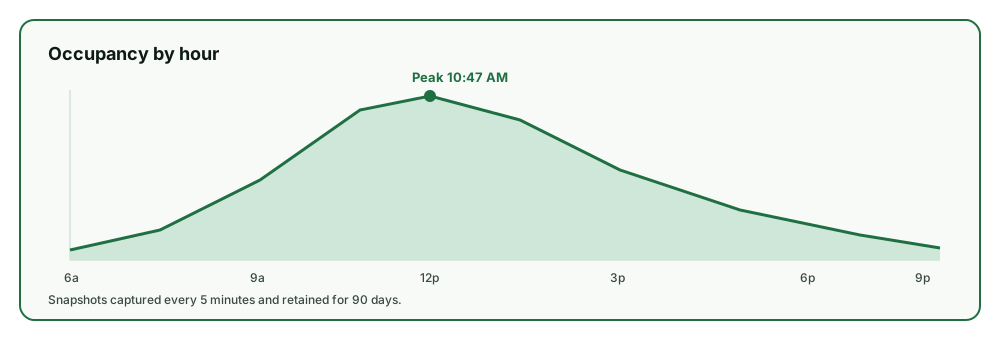
A hospital campus is not one parking lot — it is several, each with its own constituency. Mercy Ridge Medical Center runs staff permit zones, short-stay visitor parking near the entrances, and accessible spaces, spread across five lots and 1,900 spaces. Under the prior metered setup, every rate change meant touching hardware in the field, every lot reported separately, and the facilities team had no single place to see occupancy across the campus.
The fix: QR signage and a single multi-lot dashboard
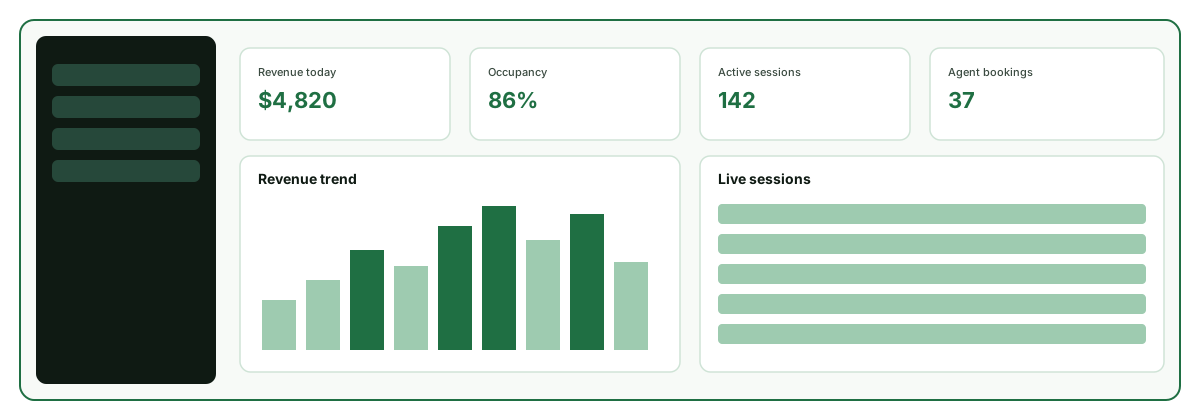
The facilities team replaced the meters with printed Park Graph QR signage at each lot and moved management to a single dashboard. Each lot kept its own rate and rules — staff zones, visitor parking, and accessible spaces priced independently — but the team now adjusts any of them, and reviews occupancy across all five, without leaving the screen. The team reported 88% scan-to-pay adoption across the campus.
The clearest gain was on the visitor side, where turnover is highest and the prior meters created the most friction. With visitors scanning and paying in their browser rather than fumbling at a meter, the team reported a 140% increase in visitor-parking revenue against its prior setup. All five lots were live in five days, with no per-meter installation or ongoing maintenance.
How these numbers were measured
We hold ourselves to a clear standard on how we publish case studies. The figures above are operator-reported by the Mercy Ridge Medical Center facilities team and authorized for publication. They reflect the team's own before-and-after measurement of scan-to-pay adoption and visitor-parking revenue. We have not independently audited the underlying ledgers, so we present these as operator-reported rather than Stripe-verified. Revenue is stated as a percentage change relative to the prior metered setup because absolute dollar amounts were not disclosed for publication. A named, attributable operator quote is not included; we do not publish quotes we cannot attribute.
Explore the playbook behind this deployment
Frequently asked questions
- Are these figures verified?
- The metrics on this page are operator-reported and authorized for publication by the facilities team at Mercy Ridge Medical Center. They reflect the team's own measurement of scan-to-pay adoption and visitor-parking revenue change before and after switching to Park Graph. Revenue change is expressed as a percentage relative to the prior metered setup; absolute dollar figures were not disclosed for publication.
- How does one dashboard handle five different lots?
- Each of the five lots has its own rate and rules — staff permit zones, short-stay visitor parking, and accessible spaces all priced differently — but the facilities team manages them from a single Park Graph dashboard. Adjusting a rate or reviewing occupancy for any lot does not require sending anyone to a meter or pay station.
- What happened to the meters?
- They were retired. The deployment was hardware-free: printed QR signage at each lot replaced the prior meters and pay stations. The team reported all five lots were live in five days, with no per-meter installation or maintenance overhead.